
Winning the mind game of influence takes more than mere logic
“Speech is a powerful master and achieves the most divine feats with the smallest and least evident body. It can stop fear, relieve pain, create joy, and increase pity.”
So said the Greek sophist Gorgias, who taught the art of rhetoric and oration more than two thousand years ago. His words still ring true as our society grows more polarized — across politics, religion, and even science.
Today, it takes superb rhetorical skill to get people to consider your side of an argument. But a good grasp of logic and argumentation alone isn’t enough to win the crowd.
Many experts agree that underlying psychological factors play a key role in persuasion. That means beyond delivering your point as factually and logically as possible, you also need to tap into the emotions and values of your listeners to win their favor.
Psychology of persuasion
Dr. Robert Cialdini, Regents’ Professor Emeritus of Psychology and Marketing at Arizona State University, digs deeper into the psychology of persuasion in his book Influence: Science and Practice.
The book opens with the premise that people fall back on generalizations when making decisions, to save time and effort in the face of information overload. Though given little thought, these generalizations exist because they generally help people act correctly, more or less.
Through numerous empirical studies, Dr. Cialdini identifies several principles behind this tendency. One is likability, which can rest on a person’s physical attractiveness or the compliments they give. Even random similarities, like a similar-sounding name, can shape someone’s preference for another.
In another book Dr. Cialdini co-authored, Yes! 50 Scientifically Proven Ways to Be More Persuasive, an experiment by social researcher Randy Garner found that people respond better to those whose names sound similar to their own.
The experiment involved two groups. The first received a survey by mail from someone with a similar-sounding name — participant Robert Greer, for instance, getting the survey from a ‘Bob Gregar.’ The second received the same survey, but from someone with a dissimilar name.
Of the first group, 56 percent completed and returned the form — almost twice as many as the second group, where only 30 percent responded.
This, and similar findings, prove Dr. Cialdini’s point: people are more receptive to those who share characteristics with them, whether in looks, name, beliefs, school, hometown, and the like. Persuading them to your side, then, becomes a matter of exploiting this behavior.
A matter of justice

Dr. Cialdini’s insights may be aimed at salespeople and advertisers, but the same psychology game plays out in far more serious settings, like the courtroom.
Like all human beings, jurors are susceptible to influence. While sworn to remain fair and impartial, a jury can still be swayed by the members’ shared values with the parties in court, or their disposition at the time of trial.
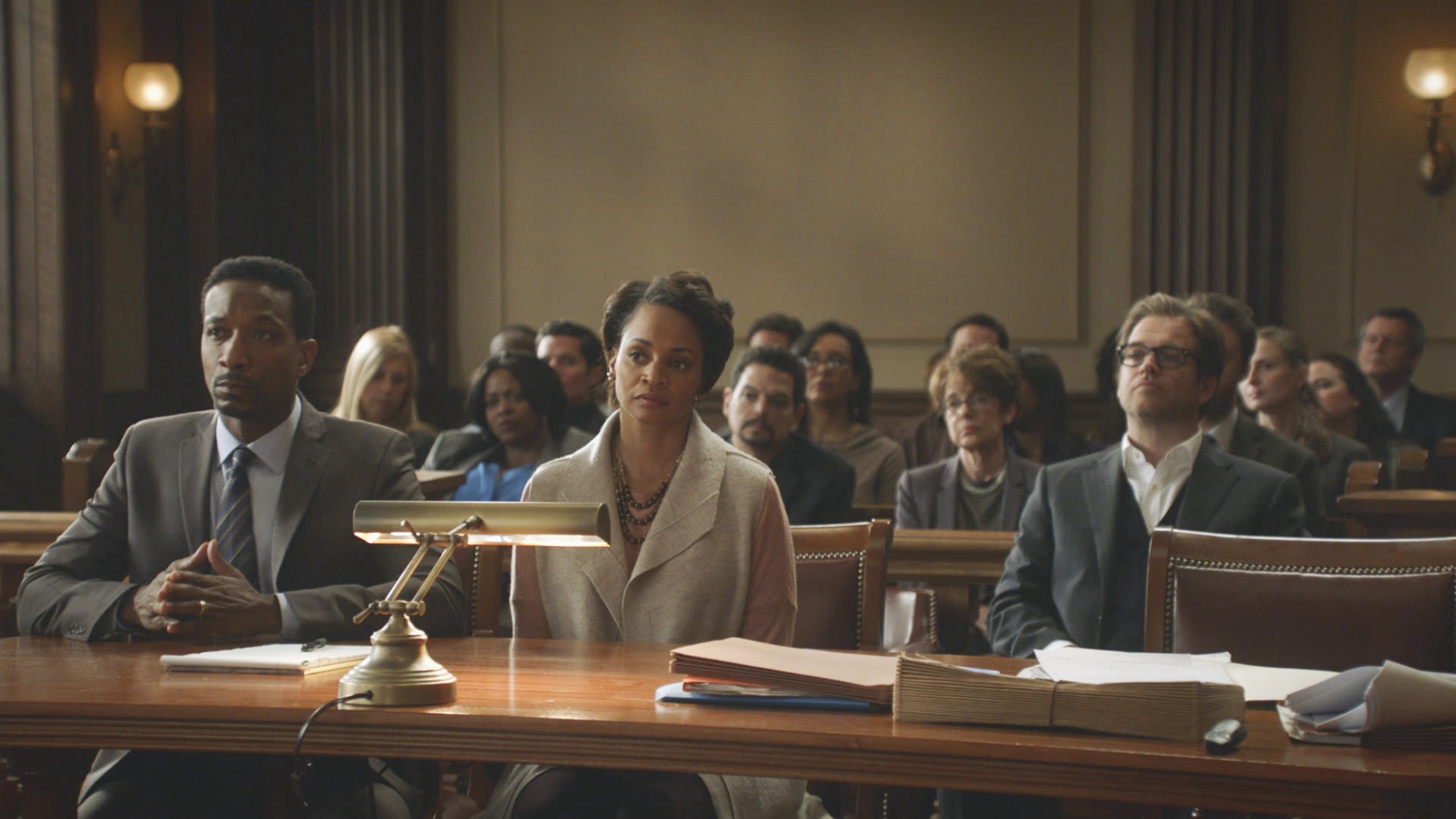
The way these unspoken biases get exploited is best captured in the television show Bull. From facial expressions and hand gestures to choice of clothing, protagonist Dr. Jason Bull (Michael Weatherly) understands that non-verbal language can be used to play on unspoken preferences and values.
With his team at Trial Analysis Corporation (TAC), Dr. Bull runs extensive research on the jury in his client’s case and uses it to gain an edge. In the episode “The Fall,” for instance, his client wins over an animal activist on the jury by tricking the opponent into producing his keychain during questioning — which turns out to carry a genuine rabbit foot charm, a seemingly insignificant item that ends up costing him the trial.
In another episode, “E.J.,” Dr. Bull and his team win the jury by getting their client to sympathize with the opponent. By having the client come to her opponent’s defense, she appears more likable to the jurors.
As the season finale approaches, will TAC still have enough psychological tricks up its sleeve to win the case and save the day? Catch Bull every Wednesday, 9pm, first and exclusive on RTL CBS Entertainment.