
Twelve Filipino labels wrapped a three-day exhibition in Milan on September 24. The venue was Fondazione Sozzani, a gallery and design space that turns into a buyers’ stop during Milan Fashion Week. The program, FASHIONPhilippines Milan, is in its second year. It is organized by the Center for International Trade Expositions and Missions (CITEM), the export-promotion arm of the Department of Trade and Industry (DTI), with Fondazione Sozzani as its Milan partner, and its goal is plainly commercial: put Filipino brands in front of European buyers and press while the city’s Spring/Summer 2027 shows are on.
Three weeks earlier, Manila held its own fashion week at the SMX Convention Center at SM Aura in Bonifacio Global City. In between, Alex Eala’s front-row seats at New York Fashion Week became a story about Filipino visibility in their own right. Philippine fashion has rarely shown up in this many places in a single September. The harder question is what a foreign buyer should circle on the calendar if they want to see it at home.


A Name the Founders Turned Down
For most of the last three decades, the answer was Philippine Fashion Week. Brothers Joey and Audie Espino started it in 1997, after Joey came back from the shows in New York convinced the country needed its own. When they chose a name, they considered “Manila Fashion Week” and rejected it, because Joey wanted a national platform rather than a city one. The event ran twice a year for most of its life, in May and October. Its alumni list includes Michael Cinco, now a Dubai-based couturier, and London-trained Lesley Mobo.
Then came a long pandemic pause. In October 2024, Philippine Fashion Week relaunched at the Ayala Museum in Makati under new management, Amorada Inc., led by chief vision officer Nikky Nicandro III, and recast itself as a lifestyle platform spanning seven sectors, from dining and wine to travel and wellness. “Our mantra is to become a global destination,” Joey Espino said at the relaunch. Since then, it has partnered with brands to run smaller pocket shows, documented on its Instagram page, instead of staging a single full season the way fashion weeks in other countries do.
Where Manila’s Runway Went Instead
The name the Espinos passed on is now the one drawing the crowds. MNL Fashion Week grew out of an earlier initiative called The Week, which ran from 2022 to 2024. Its second edition ran September 3 to 6, 2026, with an explicit ambition to make Manila a stop on Southeast Asia’s fashion calendar.
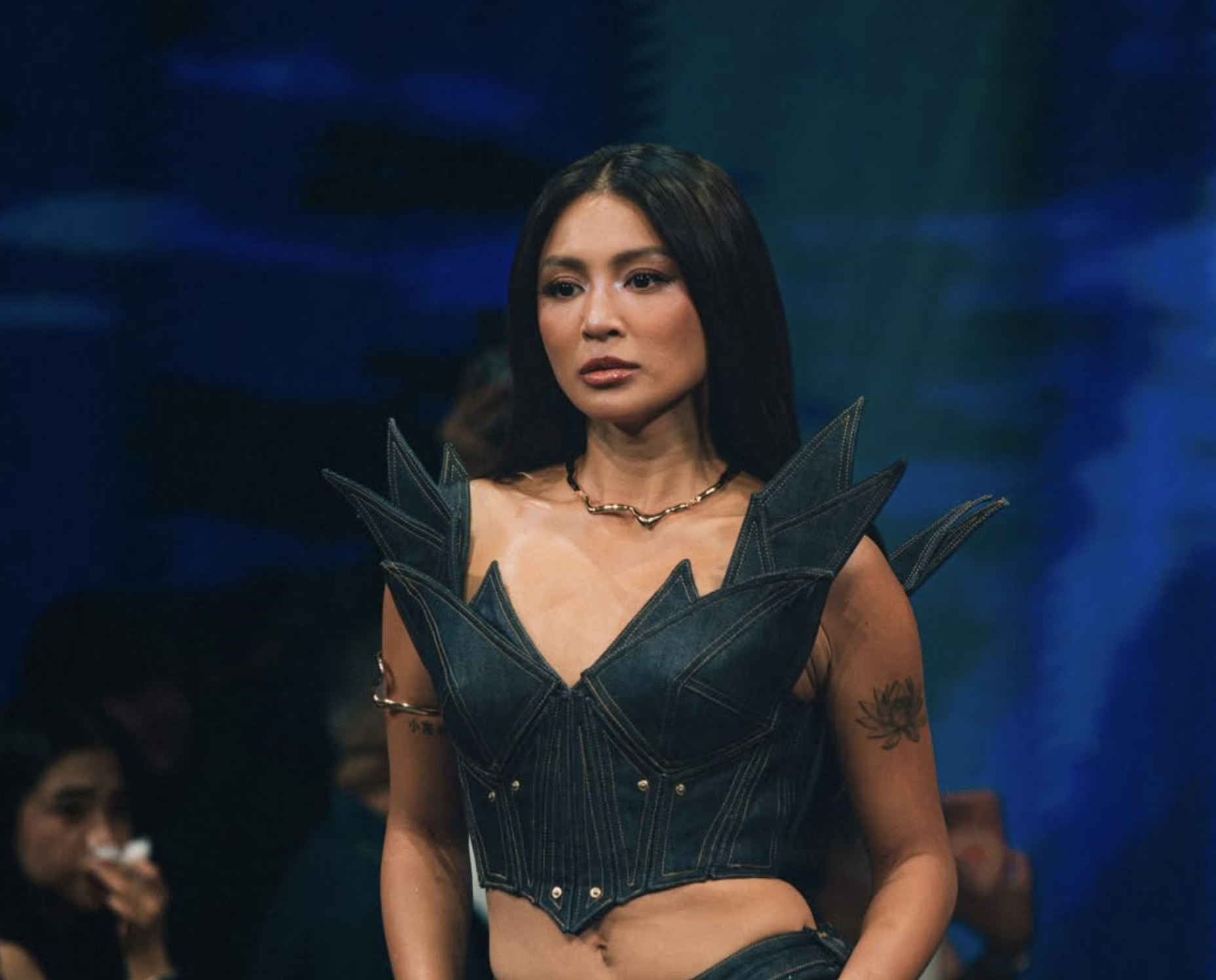
Opening night showed how the platform works. Designer Nicolò Perez’s label, nicolò, opened with “Flow State,” a collection about the pull of constantly moving forward. The local label Yong Studio followed with “Perpetua,” a four-part meditation on change. The closing slot belonged to JAG, the Philippine denim label marking its 50th year, which named Nadine Lustre its newest ambassador. JAG also used part of that anniversary slot to showcase three labels making their MNL Fashion Week debut: Yana Kalaw Studios, Kill Joy Studios, and Lilah Roché. The three worked from very personal material, including queer femininity, Manila street memory, and the noir action films their parents grew up on.


A Calendar Split Four Ways
Take the runways away and the rest of the Philippine fashion year belongs mostly to trade and talent-scouting. Manila FAME, CITEM’s export fair for home, fashion, and lifestyle goods, has run since 1983. Its 74th edition, October 15 to 17 at the World Trade Center Metro Manila in Pasay, will host roughly 400 manufacturers and brands looking for overseas buyers. The main pipelines for young designers are competitions such as the Bench Design Awards and the Mega Young Designers Competition.
Each of these serves a different constituency: the export sector, the retail brands, the magazines, and the runway producers. None of them has become the single annual event the entire industry plans its year around, which is what Philippine Fashion Week once was.
The Filipinos Already Winning Abroad
The global reach is real, and it has mostly been built person by person. Cebu-born Monique Lhuillier dresses red carpets from Los Angeles, Josie Natori has run her label out of New York since the 1970s, and Michael Cinco’s couture sells out of Dubai. On the pageant circuit, Filipino designer Rian Fernandez made the gown R’Bonney Gabriel wore to win Miss Universe 2022.
Filipino celebrities now carry weight in the front rows of the Western fashion capitals, too. Launchmetrics, a firm that measures the publicity value brands earn from appearances and social posts, ranked two Filipinos, Heart Evangelista and Pia Wurtzbach, first and third among celebrities at Paris’s Spring/Summer 2025 shows in October 2024, ahead of every South Korean star on the list. Evangelista alone generated about $10.6 million.
What’s new is the state trying to turn that goodwill into orders. The first FASHIONPhilippines Milan, in 2025, ended with two Filipino brands signed to Paris-based showrooms, the sales agents who connect labels with international stores. This year’s 12 include Renz Reyes, Viña Romero, Ziv Rei Alexi, Palengke, and Bagasáo. The program has a stated target: a globally competitive Filipino fashion industry by 2035. It also leans on a sustainability pitch, Philippine Tropical Fabrics woven from plant fibers such as piña (pineapple leaf), abacá, banana, and water hyacinth. Its own organizers admit that the gap now is business readiness, meaning wholesale pricing, delivery schedules, and how a collection is built for buyers, more than talent.
The Neighbor That Picked One Stage
Across the region, Jakarta shows what consolidation looks like. Jakarta Fashion Week has run every year since 2008 and bills itself as Southeast Asia’s largest. Its most recent edition drew more than a hundred designers, open backing from Indonesian officials, and a first-ever ASEAN Fashion Parade that included designers from the Philippines. The next edition runs October 26 to November 1 at Pondok Indah Mall in South Jakarta.
The contrast is structural. Indonesia put its industry, media, and government behind one annual platform. The Philippines, which holds the ASEAN chairmanship in 2026, currently has an export agency in Milan, a legacy fashion week remaking itself into a lifestyle brand, and a two-year-old runway in Bonifacio Global City, each pursuing the regional spotlight separately. Filipino designers have already made their case to Milan and Paris. The country’s fashion business has yet to decide which of those stages is its own.
Coming Up
Manila FAME 2026: October 15–17, World Trade Center Metro Manila, Pasay. CITEM’s export fair for home, fashion, and lifestyle products.
Jakarta Fashion Week: October 26–November 1, City Hall, Pondok Indah Mall 3, Jakarta.
Photos used in this article are from the Instagram pages of MNL Fashion Week, filipinofashiontalk, Yana Kalaw Studios, Lilah Roché, Kill Joy Studios, and Manila FAME, and from Fondazione Sozzani. Runway photo of Yana Kalaw Studios’ “Tibo” collection by Alvin Kasiban.
Pingback: LIKHÂ x Tory Burch: The Ella Bucket Bag Hand-Crocheted by Filipino Artisans | ELYSPLANET