
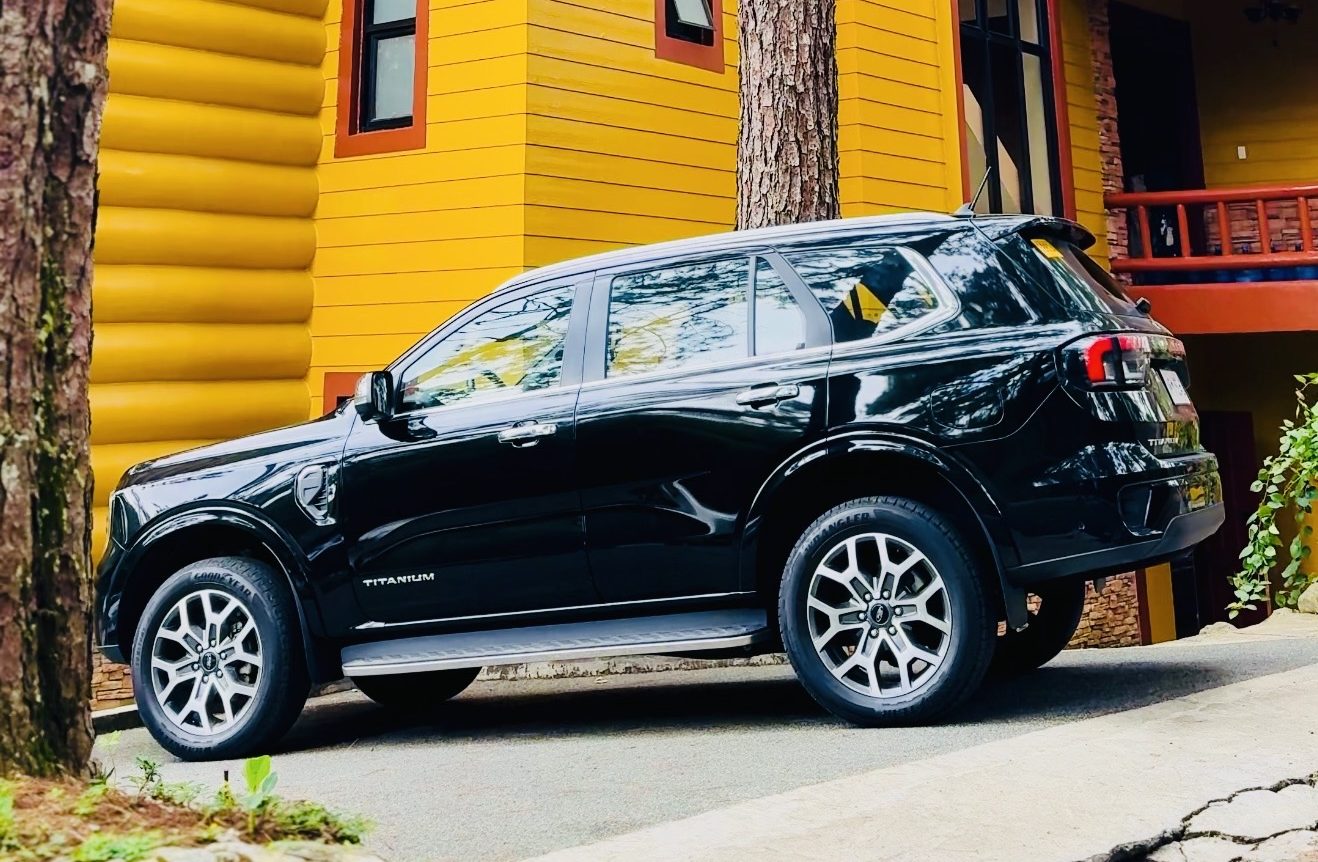
We left Manila a little past midnight, which meant the Everest had nothing to prove for the first hour. The real test came the next afternoon, at the SM roundabout in Baguio City — the same bottleneck that swallows every car eventually, five-hour mountain drive or not. That’s where the loaner Ford Philippines handed over for this trip, the same vehicle already making a cameo in “Baguio’s Quiet Isn’t Free Anymore” and “Where to Eat in Baguio,” actually started earning its keep.
Worth saying plainly, up front: Ford Philippines provided this Everest at no cost to ElysPlanet, for all three days of the trip covered across both pieces above — not a press-event afternoon behind the wheel, but the actual vehicle we sat in through Baguio’s traffic, drove up the Cordillera’s grades in, and got caught in a real downpour with, unplanned.
I’ve always liked driving — it’s genuinely how I decompress, more than anything else on a trip like this. I drove a Subaru for years before switching to a Montero Sport, so I came into this loan already partial to a certain kind of vehicle: tall, torquey, built for terrain rather than a parking lot. One thing did stand out, though: the sunroof. It’s something I missed once I moved to the Montero Sport, which didn’t have one. We had it back for this trip, and used it in both directions — sun and rain — whenever the weather let us.


Traffic Before the Mountains
Baguio on a weekend doesn’t feel like a mountain town so much as Manila at altitude — the same crawl through the SM roundabout and Session Road corridor that “Baguio’s Quiet Isn’t Free Anymore” spends its first section on. Sitting in that gridlock is where a body-on-frame SUV like the Everest, built on the same underpinnings as the Ranger pickup, makes its case: a tall seating position that lets you see past the car ahead, a cabin quiet enough that idling traffic stops registering as stress, and enough sound insulation that Baguio’s diesel jeepneys and honking never fully made it inside. Three adults and their gear rode comfortably for three days straight, which a smaller crossover would have made noticeably tighter by day two.
The Everest’s collision assist earned its keep here too, on two specific, recurring problems: motorcycles cutting across the zigzag stretches without much warning, and pedestrians stepping off the curb on Session Road right as the light turned green. Neither is a rare event in Baguio traffic. Having the system flag both gave me a real margin against a small misjudgment turning into something worse.


Built for the Climb
The Cordillera climbs are where the Everest suited the trip rather than just tolerated it — the sharp switchbacks and sustained grades between Baguio and outlying towns like Itogon and Ambiong. Ford’s diesel four-cylinder lineup for this SUV leans on turbocharged torque rather than high revs, which is the right call on terrain like this: power comes on low and stays flat through a climb, so the engine isn’t straining audibly the way a smaller naturally-aspirated engine would on the same incline. It isn’t a sporty drive. It’s a vehicle that makes a steep, technical mountain road feel routine.
When the Fog Rolled In
The fair May weather this trip was chasing broke without warning on day two — fog thick enough to swallow Tam-Awan Village mid-visit, then a real downpour by the time we reached North Haven Spa, then a steady drizzle the next morning on the drive out to Mount Camisong. This is the kind of driving a spec sheet doesn’t capture: low visibility, wet asphalt on roads with real elevation change, a schedule bending around the weather instead of the other way around. The Everest handled it without drama — good headlight throw in the fog, no unsettling body roll on the wet switchbacks, wipers and defogging that kept up without needing to think about them.


The Cost of Driving Something This Big
The tradeoff shows up once you’re off the highway and back in Baguio proper. A seven-seat SUV built for Cordillera grades isn’t built for Session Road’s narrow lanes or the tight, informal parking around Luisa’s Cafe and the Night Market strip. The same size that made the highway stretch effortless made squeezing into a curbside spot near Harrison Road more of a production. That isn’t a flaw specific to this SUV — most vehicles this size run into the same wall in a hill town laid out long before anyone drove one. Worth knowing before you book something this size for a Baguio weekend built mostly around walking downtown.


The Verdict
The Everest handled a five-hour night drive, a full day of Baguio traffic, a real downpour, and a fogged-in mountain descent without ever becoming the story of the trip. Coming from years in a Subaru and now a Montero Sport of my own, I recognized the type immediately — this is a vehicle built for exactly this kind of driving, and it did the job. Between the sunroof and the collision assist actually catching real moments on the road, the two things that stood out to me personally both held up. The one place it asked something of us was parking downtown, and that’s a size question more than a build-quality one.
The Specs, for Reference: this is the current-generation Everest lineup Ford Philippines sells today — the diesel four-cylinder Everest, not an older or outgoing model.