
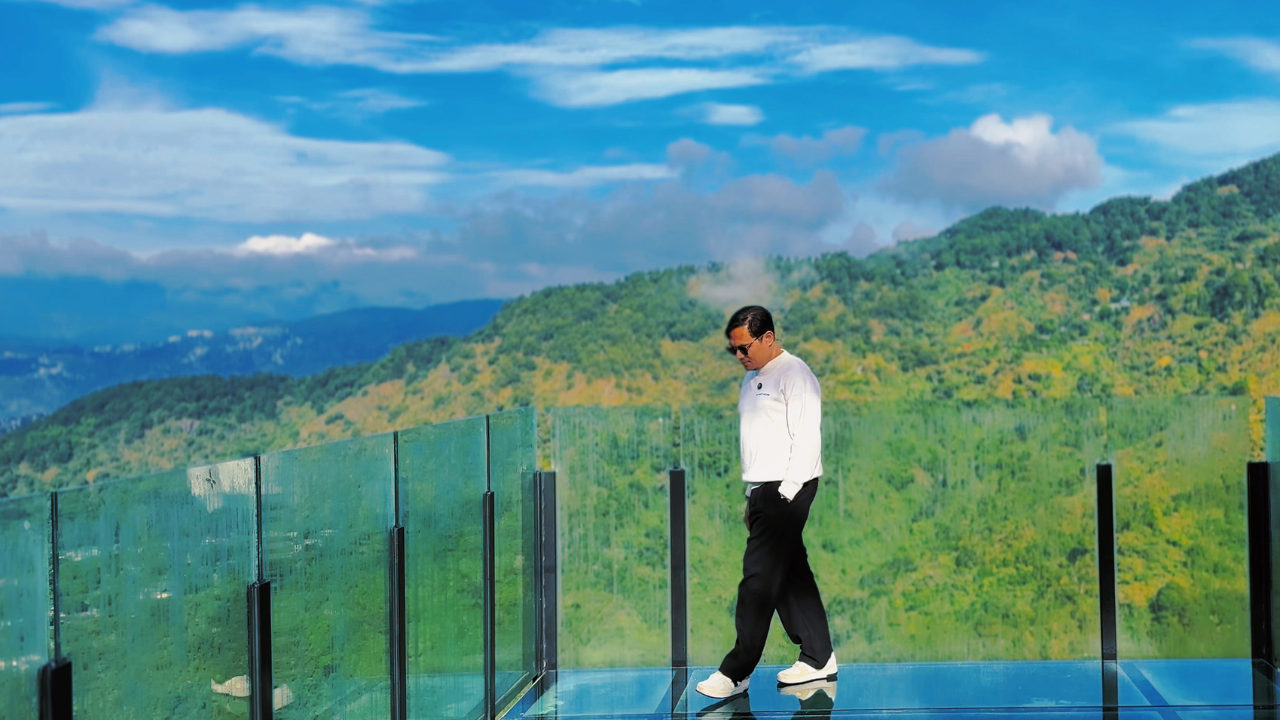
We drive five hours up a mountain to escape Manila’s traffic and arrive to find the exact same traffic waiting at 5,000 feet. That’s not a punchline — it’s the actual state of the summer capital on any given weekend now. Baguio was built as a release valve for the lowlands, a place where stepping out of the car and into cold air did most of the work of resetting your head. That transaction still exists. It’s just gotten a lot more expensive, and not in a way that shows up on a hotel bill.
The city hasn’t run out of quiet. It’s run out of quiet in the places tourists already know to look. To find it now, you have to get past the usual tourist spots. If you can, skip the loop around Session Road and the SM roundabout — the same bottleneck that clogs every city with a mall poorly zoned into its downtown — and push into the ridges of Benguet, where the concrete stops and the pine actually gets to do its job.
The Locals Are the Ones Absorbing the Trade-Off
The uncomfortable part isn’t the traffic. It’s who’s actually paying for it. Baguio’s water district produces roughly 55,800 cubic meters of water a day against an average daily demand of about 62,600 cubic meters — a shortfall even before tourist season pushes demand higher, since arrivals alone average 1.2 million a year with visitors staying an average of three days and two nights. That gap doesn’t distribute evenly. Baguio has been rationing water since the early 1990s because of an aquifer that was already overstressed relative to the city’s population before tourism ever entered the equation, and hotels — the ones tourists are staying in — tend to get prioritized for both water and power, generator sets included, so the brownouts and the dry taps land disproportionately on residents. The same goes for the public markets and the narrow alleys packed with visitors: those aren’t backdrops, they’re business infrastructure for people who live there year-round, absorbing an estimated 550 tons of garbage a day on a normal day, per the city’s own 2022 waste characterization study — a figure that climbs by roughly another 140 tons a day once peak tourist season hits, so the crowd that photographs well is also, quite literally, the crowd generating the extra load.
None of this is an argument against visiting. Tourism is income for a city that depends on it — the local tourism office still funds and promotes events like Panagbenga specifically because the money matters. But “the money matters” and “the money is enough to offset a structural water and waste deficit this size” are two different claims, and it’s worth sitting with the gap between them before writing off Baguio’s congestion as just an inconvenience for visitors.

Silence, Now Sold Behind a Gate
Here’s the part that reframes the whole trip: peace, at this point, is a product you buy. Camp John Hay’s manicured lawns and protected old-growth trees exist because strict rules and heavy funding keep them that way — the same rules that keep out the density crushing the rest of the city. Paying for a quiet hotel, a private dining room, an exclusive gate isn’t really about luxury branding. It’s tuition for opting out of a problem the same tourism dollars helped create. It’s a strange loop: we come to the mountains to escape the noise of overcrowded cities, and the mechanism we use to actually find quiet once we’re there is the same one — paywalled exclusivity — that overcrowded cities run on.
Even the drive reflects it. Ford Philippines loaned a Ford Everest for this trip, and its quiet cabin, effortless on the Cordillera’s sharper grades, turned “sitting in Baguio traffic” into a controlled, insulated non-event rather than a stress test. That’s not nothing. But it’s also a version of the same trade: comfort purchased, not found.

A Different Model, Up in Itogon
The more interesting fix isn’t happening in the city center — it’s happening on the edges, in places like Mount Camisong Forest Park in Itogon. The park caps how many people can enter on a given day, keeps 90% of its forest canopy untouched, and paints its buildings dark specifically so they disappear into the shadows instead of competing with the tree line. It runs on solar, manages its own waste, and treats “closed today” as a legitimate part of land management rather than a customer-service failure. Entrance runs P500 for a regular adult ticket, with a discounted P400 rate for students and residents of Baguio, La Trinidad, Itogon, Sablan, Tuba, and Tublay (the BLISTT cluster), and P350 for seniors and PWDs — a real number, not a token gate fee, and one that functions almost like a self-selecting cap on its own.
That’s the actual template. Not exclusivity as snobbery, but exclusivity as an ecological ceiling — proof that a mountain town can host tourism without slowly converting into the city people are trying to leave behind. Baguio’s version of this problem is really a math problem: too many visitors, on the same weekends, hitting a fixed amount of water, road, and quiet. Camisong just did the math honestly and built a cap — and a price — around the answer.
Who’s Actually Buying the Peace
The version of Baguio worth defending isn’t the roundabout traffic or the packed markets — it’s the hour before the tour buses arrive, when the wind through the pine trees is doing all the talking and the weathered wood of an old cottage is the loudest thing left to look at. That version still exists. It’s just no longer the default experience; it’s the one you now have to deliberately go looking for, and often pay to protect.
The honest accounting isn’t “don’t go.” It’s noticing that the calm you’re buying back on a Baguio weekend is frequently subsidized by someone else’s water shortage, and letting that change how you travel — where you spend, which places you support, and whether you treat the mountain’s limits as real constraints or just someone else’s problem to manage.
Field Notes
Camp John Hay — public grounds are free to walk; earliest morning hours (before the tour buses arrive) are the quietest window on the property.
Mount Camisong Forest Park, Itogon — open daily 7 AM–8 PM. Entrance: P500 (regular adult), P400 (student or BLISTT resident, valid ID required), P350 (senior/PWD), free for children 6 and under. About 30–35 minutes by car from Session Road; arrange a return ride in advance since the area has little standing transport.
Getting around — traffic through the SM roundabout and Session Road corridor is worst on weekends and holidays; if you have flexibility, arrive Sunday night or very early Monday to catch the between-crowds lull described above.
Budget (PHP)
This piece is built around a place, not a menu — there’s no per-meal breakdown here (that’s the companion food-crawl piece below). The two hard figures worth carrying with you before booking: Baguio’s water district is running a structural shortfall of several thousand cubic meters a day even outside peak season, and the city generates an estimated 550 tons of garbage daily on a normal day, climbing further once tourist season hits — both worth keeping in mind before booking a water-heavy stay (hot tubs, multiple daily showers, and so on) during a packed weekend. If you’re budgeting for Mount Camisong specifically, plan on P500 per person just for entry.
We shot the footage behind this piece earlier this year — the drive up, Camp John Hay, and the trip out to Itogon. If you want the visual feel of the traffic, the quiet, and the contrast between them, the video’s still up here or watch below.
Pingback: Where to Eat in Baguio, From a P300 Carinderia to The Manor’s Buffet | ELYSPLANET
Pingback: Raymond Paris Cabuco Found His Voice in Pageantry | ELYSPLANET
Pingback: Three Days, Every Kind of Bad Weather: The Ford Everest’s Baguio Verdict | ELYSPLANET