
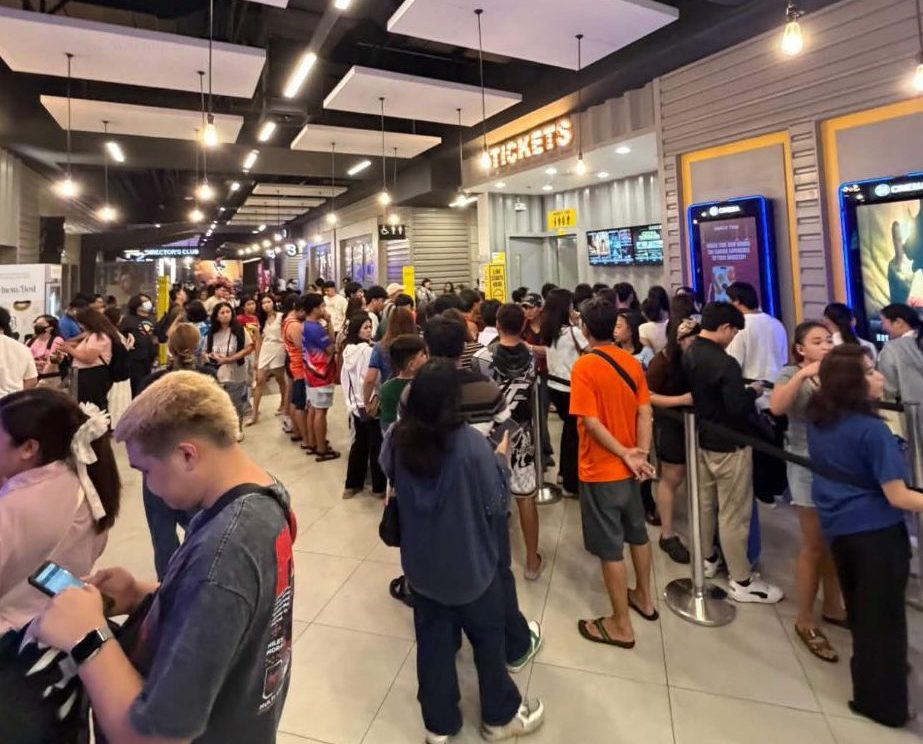
Philippine National Cinema Day landed on September 12 for a reason almost nobody advertised: it’s the 107th anniversary of Dalagang Bukid, the 1919 silent film recognized as the country’s first full-length, Filipino-produced feature. Whether that timing drove any of it, the ₱100 tickets did their job. By Saturday evening, Twitter and Threads were full of the same image repeated across a dozen malls — packed rows, box office lines that didn’t move, cinemas that hadn’t looked like that on an ordinary Saturday in months.
The date wasn’t a coincidence. The Cultural Center of the Philippines used that same September 12 to anchor Sine Sandaan, the 2019 celebration marking 100 years since Dalagang Bukid‘s release — and it’s the reason September has carried the designation of Philippine Film Industry Month ever since. This year’s National Cinema Day sat inside that same month, timed to the anniversary rather than picked at random. A Facebook post from the Film Development Council of the Philippines (FDCP), the government agency that oversees the local film industry, marked the day simply: 107 years of stories.


One Industry, One Day, One Price
The event was organized by the Cinema Exhibitors Association of the Philippines (CEAP), the trade group representing the country’s movie theater operators, working alongside the FDCP, the Film Academy of the Philippines, the Movie and Television Review and Classification Board (MTRCB), and the Metro Manila Film Festival through the Metropolitan Manila Development Authority (MMDA). At the official launch on August 25, CEAP President Irene Jose called it an invitation to experience “the excitement, emotion, and community of watching movies on the big screen.”
The mechanics were simple. For one day, every Regular 2D screening at more than 100 participating cinemas nationwide — SM, Ayala Malls, Robinsons Movieworld, Megaworld, Vista Cinemas, Cinema 2000, and CityMall among them — dropped to a flat ₱100, applied to every title already on the schedule that day, local or international, no curated lineup required. Premium formats like IMAX, 4DX, ScreenX, and Director’s Club sat outside the promotion and kept their regular pricing. It was the first time the country’s cinema chains, usually competitors for the same limited moviegoing peso, coordinated under one campaign on the same calendar day.

The Math That Actually Moved People
A regular 2D ticket in Metro Manila normally runs between ₱280 and ₱420 depending on the mall, with the national average closer to ₱330. A Netflix Standard subscription in the Philippines costs ₱449 a month. Under normal pricing, one cinema trip and roughly two-thirds of a month’s unlimited streaming cost about the same amount — the same tradeoff this site’s Cinemalaya coverage flagged in August: Filipinos budgeting an evening out, and increasingly an unusual share of that evening’s budget, on a single unfamiliar title.
At ₱100, that math changes. A National Cinema Day ticket cost less than a quarter of a Netflix Standard month and under a third of what the same seat usually charges. Based on what circulated across social media all Saturday, people came.


What a Full House Actually Proves
The UK’s own National Cinema Weekend, held earlier the same month, reported that 40% of attendees said they wouldn’t have gone to the cinema that weekend without the event — evidence the discount created new demand rather than simply moving already-planned trips to a cheaper day. The Philippines hasn’t published an equivalent figure yet. Confirmation of how much of Saturday’s traffic was new, versus redirected from a different weekend, is still pending from CEAP or the FDCP.
There’s a second question this site raised in its CinePanalo coverage a few weeks back: financing supply and generating demand are separate problems, and solving one doesn’t automatically solve the other. National Cinema Day solved the price problem for a single day. Whether Filipinos pay full fare for an unfamiliar Filipino title on the other 364 days remains untested — and it’s the question CEAP’s own trade group has the least incentive to answer for free.
The same week cinemas filled up nationwide, Filipino-language film had two entries in the same Oscar race: Rafael Manuel’s Filipiñana, the Philippines’ own official Best International Feature submission, and Ruby Ruiz leading Australia’s first-ever Filipino-language entry, First Light. A packed multiplex on a ₱100 Saturday and a shortlist run at the Academy Awards are different scales entirely, but they landed in the same week for the same underlying reason: audiences and juries both found something worth paying attention to.
CEAP got proof of something real: the appetite for big-screen moviegoing is still there, even against a market where a phone and a subscription can deliver the same movie for less. Whether that appetite survives a ₱330 ticket again next weekend is the number the industry still has to solve for.
Photos used in this article are from the FDCP Facebook page and from moviegoers who shared their own photos on social media.