
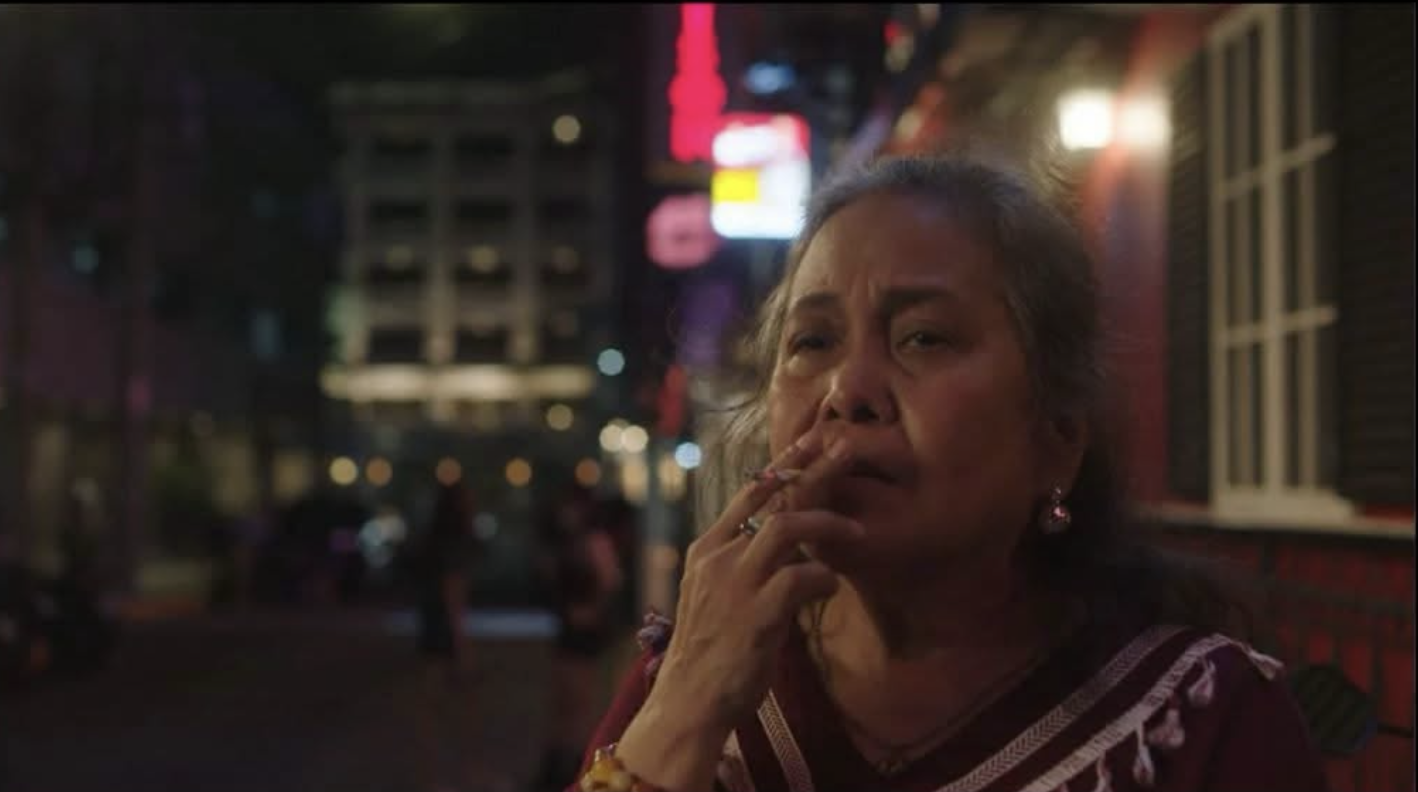
Metro Manila has spent most of August under Habagat — the southwest monsoon that floods the city’s streets on a schedule closer to weekly than seasonal — and people have still been crossing town for Cinemalaya. The past week’s heavy weather hasn’t stopped Filipinos from flocking to malls and theaters for this year’s lineup, ticket-runs and all. That’s not a small detail for a festival built on films most of its audience had never heard of a month ago.
Cinemalaya — the Cultural Center of the Philippines’ independent film festival, now in its 22nd year — is having its longest run ever this August: 13 days, August 6 to 18, up from its usual Friday-to-Sunday weekend format, screening nine full-length films and 10 shorts across Shangri-La Plaza, Ayala Malls, and Gateway Cineplex. The Balanghai Trophy — the festival’s award, named for the balangay, the plank-built outrigger boat early Filipino seafarers used to move between islands — goes out August 17. Results aren’t in yet as of this writing. [Update: See the results below].
That timing matters, because the more interesting verdict has already been delivered — by the people paying for tickets, not the five jurors deciding the trophy.
The Familiar Accusation
For years, the shorthand explanation for the Philippine film industry’s struggles has been a single sentence: Filipinos don’t support Filipino films. It’s a convenient diagnosis because it locates the problem in the audience rather than the industry — too obsessed with Hollywood, too addicted to spectacle, unwilling to pay for anything without a superhero attached.
There’s a kernel of truth in it. But it gets harder to defend the moment you look at what’s actually selling out at Cinemalaya this month. Status: Rejected, starring veteran actress Ruby Ruiz as a widow chasing an online romance and an American visa, has generated some of the loudest buzz of the festival — trade coverage has flagged Ruiz for early Best Actress consideration, and reviewers have specifically praised her for playing an older woman’s want for romance and touch as something real rather than comic relief. It wouldn’t be Ruiz’s first Balanghai; she won Best Supporting Actress in 2022 for Ginhawa. Filipiñana, this year’s closing film, arrives with its own pedigree — director Rafael Manuel’s feature debut, expanded from a 2020 short that won the Silver Bear Jury Prize at the Berlin International Film Festival, went on to win the Special Jury Award for Creative Vision at Sundance this past January. None of that resume was inherited from a marketing budget. It was built film by film, before a single Metro Manila ticket sold.
What the Industry’s Own Chairman Is Saying — and Where I Land On It
Jose Javier Reyes, chairman of the Film Development Council of the Philippines, made a related argument at the festival’s July press conference, and it’s one I actually agree with. Reyes told filmmakers the industry has reached a point where persistence alone won’t save it — survival now depends on innovating, breaking from formula, and competing for attention against everything, not just Hollywood.
I say that as someone who used to keep a personal tradition out of exactly this: working through an entire festival lineup, Cinemalaya’s or the MMFF’s, wasn’t optional every year — it was just what those weeks meant. I don’t have that luxury anymore. Time in front of a cinema screen has become the thing I, like a lot of people, budget most carefully now, and I don’t think that shift is unique to me. Reyes is right that the industry can’t argue its way out of that with nostalgia.
But I’d push the point further than formula. The fix isn’t only a better film. It’s rebuilding the audience’s trust that spending an evening — and, increasingly, an unusual amount of that evening’s budget — on an unfamiliar title will actually pay off. That trust doesn’t come from a press release insisting a film matters. It comes from exactly what’s happening at Cinemalaya’s ticket counters this month: people telling each other a specific film was worth the trip, one recommendation at a time.

Cinema, Not Content
That’s also the piece of this the industry keeps underselling. Watching a movie in a theater has never really been about the size of the screen. It’s the room. Cinema is a communal act — it depends on people’s basic want for connection, for sitting among strangers who all showed up for the same reason and feeling a whole room go quiet or laugh at the same beat. That’s not something a phone can replicate, no matter how good the algorithm gets at guessing what you’d like next.
I watched that argument prove itself a few weeks ago, at a spot far from Cinemalaya’s lineup. A charity screening of Spider-Man: Brand New Day at Uptown Place BGC packed the house on a rainy night, every ticket doubling as a donation to a home for the elderly. Different genre, different budget, the opposite of an unfamiliar festival title — but the same instinct underneath it: people chose a shared room over a couch, on purpose, and the room gave something back that a stream at home wouldn’t have. I wrote at the time that a Saturday-night house that packed was its own kind of scoreboard. Cinemalaya’s ticket lines this August are the same scoreboard, in a different genre.
If Philippine cinema wants a pitch that actually competes with a feed, it isn’t “support local.” It’s this: an experience TikTok and streaming, for all their convenience, simply don’t offer. Cinemalaya’s crowded theaters this August — full in the rain, for films with no built-in audience — are proof that pitch still works when a film earns it.
What Filipinos Are Actually Paying For
Consider the other number defining Philippine moviegoing this month: Spider-Man: Brand New Day crossed ₱1 billion at the local box office in just 12 days, becoming only the fourth film in Philippine box-office history to hit that mark. That’s not evidence Filipino audiences have chosen Hollywood over homegrown film — it’s a different transaction entirely. A Spider-Man ticket buys certainty: a recognizable character, a built-in fandom, a marketing machine that’s been selling the event for months. Hollywood has gotten extraordinarily good at manufacturing that certainty. Independent Philippine film has to manufacture curiosity instead, with none of that infrastructure behind it — and this month, at least, it’s been doing exactly that.
Cinemalaya’s own awards structure quietly acknowledges the gap between those two audiences: alongside the Balanghai Trophies a five-person jury decides, the festival hands out a separate Audience Choice Award, voted on by the people who actually bought the tickets — a built-in admission that what wins over five jurors and what wins over a paying crowd aren’t always the same movie.
Whichever film takes the Balanghai on August 17, the question of whether Filipinos actually want to watch Filipino movies was never really in doubt this month. They proved it by showing up. What the industry does with that — whether it can turn one good festival into the kind of habit I used to have without thinking about it — is the part still being written.
Note: We will add the Balanghai Award winners below once results are out on August 17.
The Balanghai Winners
Cinemalaya announced its 22nd edition winners on August 17. Mag-Iina took Best Film and led most of the night’s craft categories, while Ruby Ruiz tied for Best Actress for Status: Rejected — the same performance this piece flagged for early buzz before the jury made it official.
Full-Length Films
- Best Film: Mag-Iina
- Special Jury Prize: 2 Valid IDs
- Best Director: Giancarlo Abrahan, Mag-Iina
- Best Actress (tie): Ruby Ruiz, Status: Rejected; Marietta “Pokwang” Subong, 2 Valid IDs
- Best Actor: Martin del Rosario, Tayo Lang ang Nakakaalam
- Best Ensemble Performance: Martin del Rosario, Miguel Ordon, Yayo Aguila, and Epy Quizon, Tayo Lang ang Nakakaalam
- NETPAC Award: Status: Rejected, directed by Vahn Leinard C. Pascual
- Best Supporting Actress: Bituin Escalante, A.ni.mál
- Best Supporting Actor (tie): Lucas Andalio, Mag-Iina; KD Omalin, Hand of God
- Best Screenplay: Guelan Varela-Luarca, Mag-Iina
- Best Cinematography: Adam Dumaguin, Tayo Lang ang Nakakaalam
- Best Editing: John Rogers, A.ni.mál
- Best Production Design: Katrish Aristoki, Mag-Iina
- Best Original Musical Score: David Yuhico, Mag-Iina
- Best Sound Design: Elian Idioma, Tayo Lang ang Nakakaalam
- Audience Choice Award: 2 Valid IDs, directed by Ma-an L. Asuncion-Dagñalan and Abet Pagdagdagan Raz
Short Films
- Best Film: Silkscreen, directed by Rey Anthony Villaverde
- Special Jury Prize: Para-Paraan, directed by Mae Chan-li
- Best Director: Gabriela Serrano, Elenita, Elena, Elaine
- NETPAC Award: The River Flows in Different Places, directed by Lot-Lot Hermosura
- Best Screenplay: Lysa Catolico and Jazmine Gin R. Pateña, RUNO!
- Audience Choice Award: Hoy! Hoy! Ingat!, directed by Norvin de los Santos
Pingback: Piracy, Not a Favor. Cinemalaya Filmmaker Calls Out Newest “Distributor” | ELYSPLANET
Pingback: Can FranSeth Survive the Vertical Screen? | ELYSPLANET
Pingback: DreamWorks Bet $100 Million on Pinoy Memory. Liza Soberano Brought It Home. | ELYSPLANET
Pingback: Puregold CinePanalo 2026 Is Finally Showing What Its ₱5 Million Gamble Bought | ELYSPLANET
Pingback: National Cinema Day Packed the Seats. The ₱330 Question Comes Next. | ELYSPLANET
Pingback: VR Relosa: Before the Vivamax King, There Was the Boy Who Slept at McDonald’s | ELYSPLANET
Pingback: Inday: The Musical Takes The Boyfriends’ Love Songs Somewhere Dark, With Elha Nympha in Her First Stage Role | ELYSPLANET
Pingback: Inday: The Musical Wants to Take the Curse Off Kulam | ELYSPLANET