
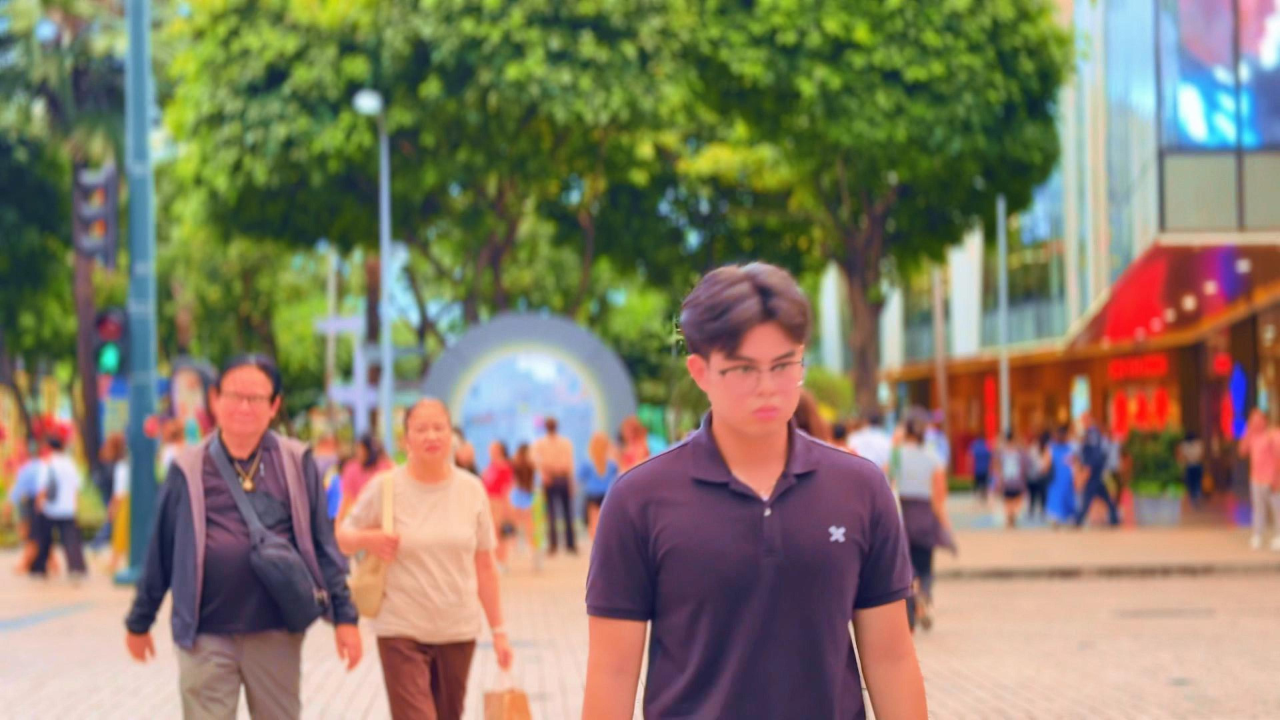
Open almost any relocation guide written about Bonifacio Global City and you’ll find the same word doing the same job. BGC — a master-planned business and residential district in Taguig, built on what used to be Fort Bonifacio, an old military base — gets described as clean, walkable, safe, international. And then, almost without fail, the same caveat shows up right after the praise: it’s a bubble. Leave it regularly to experience real Manila. Different sites, different writers, same word. That’s not a coincidence. It’s a diagnosis that’s become so standard it barely reads as criticism anymore — just a piece of practical advice, filed next to rent estimates and school recommendations.
We shot a video on BGC earlier this year that ended up getting more traction from the channel’s viewers than we expected — enough that it felt worth coming back to the question properly, in writing, once the loudest news cycle around it had quieted down.
I should say upfront that I’m not writing this as an outsider taking potshots. BGC is where I meet friends. My office is there. It’s the one part of Metro Manila where I can log a full 10,000 steps without once feeling unsafe doing it, then and now. That’s not a small thing, and it’s actually the reason the bubble reputation deserves real scrutiny instead of being waved off as elitist griping — the safety and walkability aren’t the myth. They’re real, and they’re good. Which makes the gatekeeping around who gets to enjoy them that much harder to excuse.

The Bubble, According to Everyone Who Lives There
The reputation isn’t really disputed by the people who benefit from it most. BGC consistently lands near the top of “best city to live in the Philippines” rankings — usually just behind Makati, the country’s traditional financial district — and the reasons cited are almost always the same: no street vendors, working traffic lights, and wide pedestrian paths, remarkable by Philippine standards. That last phrase does a lot of quiet work. It’s praise built on a comparison, and the comparison is the rest of the city BGC sits inside.
A one-bedroom condo here runs somewhere in the ₱35,000 to ₱70,000-a-month range — a number that filters, by design, who gets to actually live inside the parts of BGC people photograph. That’s not an accident of the market. BGC was built as a planned district from the ground up, and planned districts get to decide, structurally, who they’re built for.
None of that makes BGC unique — plenty of cities have a wealthy, gated core. What makes BGC worth writing about specifically is how openly its own marketing and its own residents describe the trade-off. Most cities don’t advertise their own exclusivity as a lifestyle feature. BGC’s expat guides do it constantly, and mostly without irony.
The Man in the T-Shirt
That reputation isn’t just about rent brackets. It shows up in who gets stopped at the door. Earlier this year, viral clips circulated of BGC’s private security marshals turning away groups of teenagers from Bonifacio High Street — not for anything they’d done, but for how they looked: streetwear, a certain walk, a certain vibe read as trouble before anyone actually caused any. BGC is technically private property, run by its own development corporation, which means it can legally set its own rules for who enters. Legality isn’t really the question people were asking online, though. The question was simpler and less comfortable: why does a wide, clean sidewalk in this specific part of Manila come with a dress code nobody officially wrote down?
It’s worth being honest that the instinct isn’t unique to BGC, or to the Philippines. Cities with visible wealth gaps tend to develop informal filters for who belongs where, and BGC’s version is just unusually well-documented because so much of it happens on camera, in a district built to be photographed. But the discomfort is still specific to what BGC claims to be. A place selling itself as the version of Manila that works — clean, safe, orderly — is also, structurally, the version of Manila that has the easiest time deciding who it works for.


A Tunnel Through the Glass
Here’s the part that actually complicates the bubble thesis rather than just restating it: there’s a subway being built underneath BGC right now, and depending on how you look at it, it’s either irrelevant to all of this or the most direct rebuttal the district has ever gotten.
Construction on the Kalayaan Avenue and BGC stations — part of the Metro Manila Subway Project, a JICA-funded underground rail line meant to eventually link Valenzuela in the north to the airport and Parañaque in the south — broke ground earlier this year, a few months after the security-and-streetwear controversy made the rounds online. Once finished, travel from Valenzuela to BGC will only take 29 minutes, down from roughly an hour and a half today. The BGC segments are expected to serve approximately 200,000 passengers daily during the subway’s first year of operations — a number that has nothing to do with income bracket. A subway station doesn’t check what you’re wearing.
The honest caveat, because the timeline deserves it: the contract covering this segment is expected to take about 67 months — five years and seven months — to finish, which puts a realistic opening somewhere around late 2031 or early 2032. This isn’t “the bubble just popped.” It’s closer to the bubble getting a demolition date it didn’t have before — distant, but real, and specific enough to hold the district to eventually.
That’s the actual tension worth sitting with. BGC didn’t ask for a subway station in order to stay exclusive. The infrastructure that’s supposed to make it more accessible to the rest of Metro Manila is arriving at the same district currently being talked about for who it turns away at street level. Both things are true at once, and the district’s next several years will basically be a live test of which version of BGC wins: the one with the gates, or the one with a train platform that doesn’t care who’s standing on it.

What BGC Actually Sells
None of this means BGC isn’t worth visiting, working in, or writing about — it clearly is, given how much of the conversation around Metro Manila still runs through it. But it’s worth being clear-eyed about what’s actually being sold when a district markets itself as “world-class”: usually, that phrase is doing the same job as the rent bracket. It’s a filter dressed up as a compliment.
We’ve made this same argument from the other side of the city already — in the piece on SM Mall of Asia, the contrast wasn’t subtle: BGC has gates, Mall of Asia has a horizon nobody has to pay to watch. BGC isn’t going to stop being a bubble because a subway is being built underneath it. But for the first time in its history as a district, there’s now a specific, dated piece of infrastructure whose entire purpose is letting more of Manila in without asking what anyone’s wearing at the door.

Field Notes
The Portal, 5th Avenue, Bonifacio High Street — a public art installation with a livestreaming screen connecting BGC in real time to cities including Dublin, Vilnius, Lublin, Philadelphia, and Ipswich. Free to visit, no reservation needed; busiest in the early evening when both time zones tend to have people on the street.
Kalayaan Avenue and BGC subway stations — under construction as of this writing, part of the wider Metro Manila Subway Project. The BGC station site sits along McKinley Parkway between Serendra and Market! Market!; expect ongoing construction fencing in that stretch for the next several years.
Where to eat while you’re here: we’ve already covered one of BGC’s Michelin-recognized dining rooms in detail — see our piece on Cochi for what the restaurant’s standard menu (not just the headline dish) is actually like.
Getting around: BGC is genuinely one of the most walkable districts in Metro Manila — wide sidewalks, minimal street vendor congestion, and a free P2P shuttle network (the BGC Bus) connecting High Street, Uptown, and the Market! Market! area. A car isn’t necessary if you’re staying within the district itself.
Budget (PHP)
- One-bedroom condo rental, BGC: ₱35,000–₱70,000/month
- Comfortable monthly cost of living for a single expat resident: roughly ₱100,000–₱160,000 (~$1,800–$2,800), covering rent, groceries, transport, and dining
- BGC Bus (P2P shuttle within the district): free
- A day of walking BGC — coffee, lunch, casual dinner: ₱800–₱1,500 per person, before a sit-down restaurant like Cochi
These figures describe the cost of living inside the bubble, not the cost of visiting it for an afternoon — the district itself is free to walk.
We shot the footage behind this piece earlier this year — the Portal, the High Street crowds, a first look at the subway groundbreaking. If you want the visual side of it, the video’s still up here.
Pingback: Arca South Used to Feed the Country. Now It Sells the Feeling of One. | ELYSPLANET