
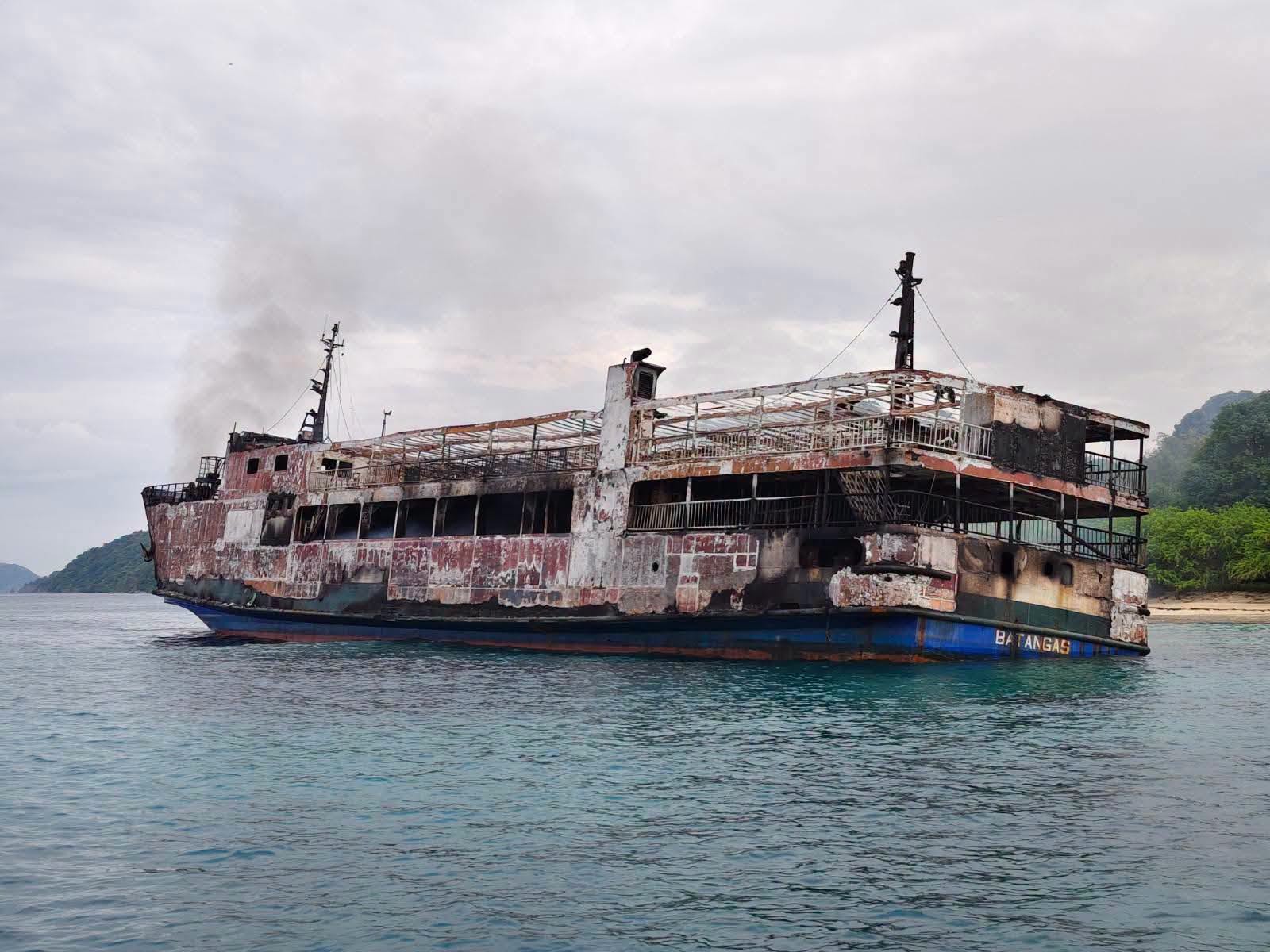
Every passenger who boarded the MV June Aster on September 9 was covered by law the moment they stepped on board. The legal minimum for a death at sea is ₱200,000, and it was only ever meant to be a starting point.
The MV June Aster caught fire off Coron, Palawan, on the evening of September 9 with 132 people aboard. As of September 24, the Philippine Coast Guard (PCG) counted 77 dead and 43 survivors, and was still searching for eight people. The ferry’s operator, Atienza Interisland Ferries, carries about ₱64 million in insurance that can go toward the victims, according to Maximo Bañares Jr., a regional director of the Maritime Industry Authority (MARINA), the agency that regulates Philippine shipping. Bañares has also said families can pursue other remedies if they want more than the rules guarantee. The claims process is working as designed. What it was designed to cover is smaller than most people assume.
The Legal Minimum Is ₱200,000. It Pays the Same for Everyone.
Under MARINA rules, domestic passenger ships must carry insurance that pays at least ₱200,000 to the family of each passenger who dies, plus up to ₱50,000 in assistance to each survivor on top of medical costs. Bañares has since said the families of those who died on the June Aster will receive ₱250,000 each. The amount is set by regulation, so it is uniform by design. It pays the same whether the passenger was a sole breadwinner with three children in school or a retiree traveling alone, and it was never built to replace what a household actually loses when that person doesn’t come home.

What “No Matter How Small” Means
This column has made a version of this argument twice already. The first piece looked at the close to ₱2 trillion poured into flood control since 2011, a large share of which, by Senate estimates, never became actual flood protection, and landed on a plain conclusion: a family’s protection has to come from somewhere closer to home than a national budget line. The second looked at what happens when families do carry their own coverage. Filipino life insurers paid out ₱69.2 billion in benefits in the first half of 2026, and payouts grew faster than premiums did.
The June Aster brings both arguments down to an ordinary trip. People boarding a ferry, a bus or a plane aren’t thinking about compulsory insurance or claims paperwork, and nobody expects them to. That is why the legal minimum exists in the first place. “No matter how small” isn’t meant to talk anyone into more coverage than they can afford. The point is that whether a policy exists at all matters more than its size. A ₱200,000 legal minimum plus even a modest personal policy leaves a grieving family with meaningfully more than the ₱200,000 alone.
What This Asks of You
How much coverage a household needs depends on its actual numbers, and that belongs in a conversation with a licensed advisor. What the June Aster makes visible is a kind of protection many Filipino families underrate: modest, affordable personal accident or life coverage, bought because ordinary life carries risk that rarely gives notice, whether or not a particular trip feels dangerous. None of the 77 who died boarded expecting September 9 to be the day the legal minimum mattered. Coverage only helps if it is in place before that day comes.
What If is ElysPlanet’s twice-weekly column of plain-language financial education for Filipino families, not investment advice or a sales pitch.