
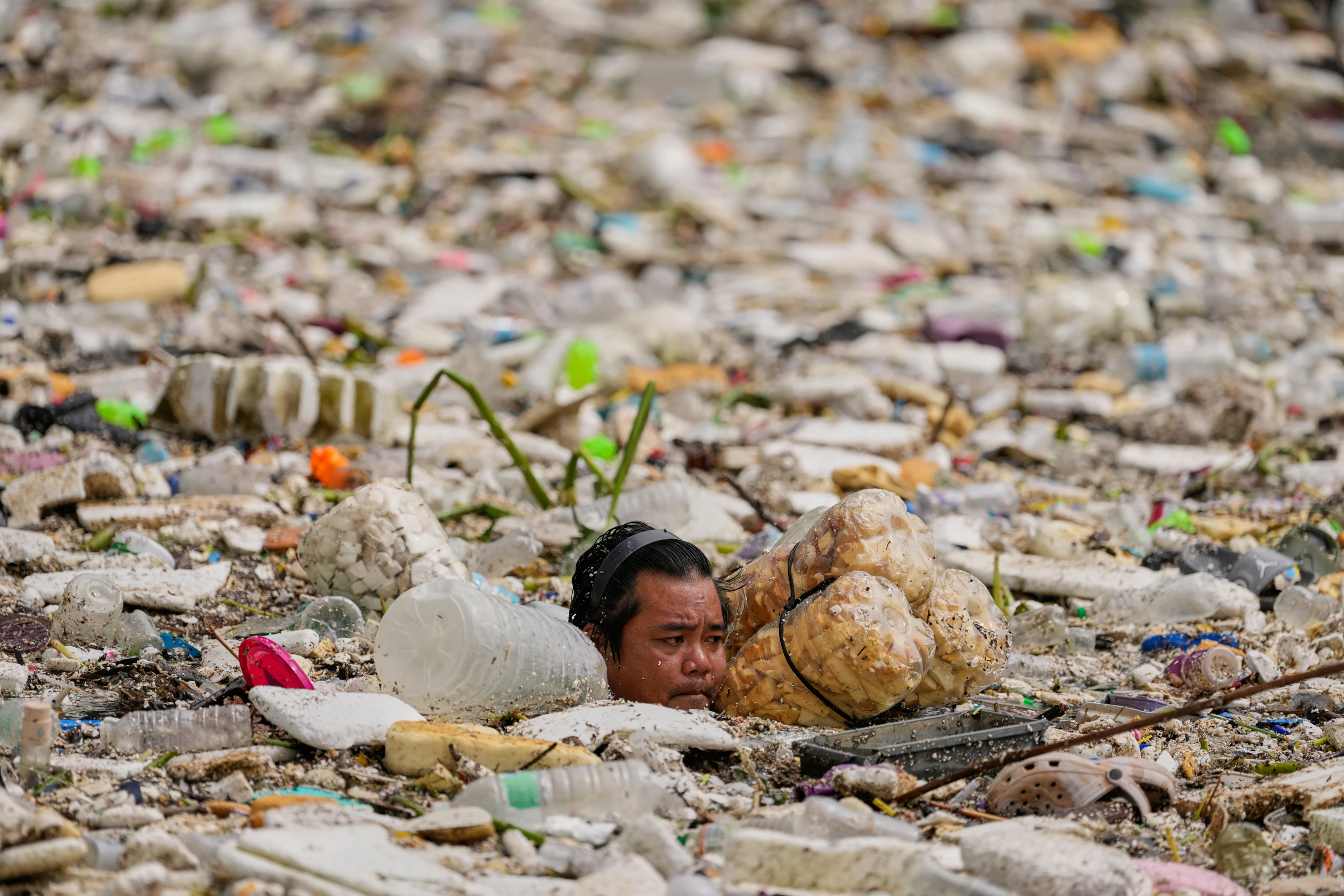
A ₱2 trillion flood-control budget, a record-low poverty rate, and a question most of us stopped asking the moment we landed our first job: what was all that saving, studying, and surviving actually supposed to protect?
Somewhere this week, a Senate hearing is happening. Someone with a title is being asked, again, where a specific sum of money went, and someone else is explaining, again, that the paper trail says the work was done while the riverbank says otherwise. We’ve been having some version of this hearing for years now — enough versions that the outrage has started to feel less like a reaction and more like a permanent weather pattern. Close to ₱2 trillion has gone into flood control since 2011, the bulk of it in just the last four years, and Senate investigators now estimate that a significant share of that — as high as 60% in some years, by Senator Panfilo Lacson’s own accounting — never became a drainage canal or a pumping station at all. I wrote about what that actually looks like from a flooded street last month: a taxi ride through knee-deep water, a driver who charged the honest fare anyway, and the quiet math of who gets to treat “bad weather” as a scheduling problem versus who gets to treat it as the night the water reaches the mattress.
That anger is correct, and it shouldn’t be talked down. But sitting with it a while longer, I noticed something underneath it that has nothing to do with any hearing: the anger isn’t a plan. It doesn’t insure a family, pay a hospital bill, or tell your children what happens to the house if something happens to you first. Somebody misspent money that was supposed to protect all of us — that’s true. It’s also true that your family’s protection was always going to have to come from somewhere closer to home than a national budget line.
Getting Out Was Never the Whole Plan
Ask most Filipinos why they studied hard, and you’ll get some version of the same answer: to get a good job, to help the family, to get out of poverty. It’s such a reflexive answer that we rarely examine whether it’s actually working the way we assume.
The Philippines recorded its lowest poverty incidence on record in 2025, at 9.7 percent — the first time in the country’s history that fewer than one in ten Filipinos has lived below the poverty line. That’s down from 15.5 percent in 2023, meaning roughly 6.5 million Filipinos crossed above the poverty line in just two years. On paper, that’s the education-to-income pipeline finally paying off at scale, and it’s genuinely historic news, worth taking at face value.
But look at what sits right next to that number. The World Bank estimates that around 28 percent of Filipinos live just above the poverty line — close enough that a single medical emergency, a single job loss, a single bad month could push them right back under it. That’s the gap nobody put in the brochure. Crossing the poverty line was supposed to be where the real planning started. For most families, it’s exactly where the planning stopped, because nobody ever taught the next part.
Money We Share, Plans We Rarely Make
Part of why that next part never gets taught is cultural, not just informational. Filipino families are, by instinct, generous with money in a way that’s genuinely admirable — utang na loob, supporting parents and younger siblings, treating a paycheck as something that belongs to the household rather than strictly to the person who earned it. That instinct has held families together through worse decades than this one.
Filipino families value security as much as anyone. What the culture built, over generations, was a strong system for sharing money, without an equally strong one for protecting it. “Bahala na” fills that gap — a way of making peace with an uncertain future instead of actually preparing for one.
Why We Send Our Kids to School
Ask a parent why they’re sacrificing to send their child to a good school, and the honest answer is almost always some version of: so they’ll have a better life than I did. It’s the same instinct that sent us to school ourselves, one generation earlier, running on repeat.
That instinct isn’t wrong. Education is still the most reliable lever a Filipino family has for changing its own trajectory, and the poverty numbers above show it’s working at a national scale. On its own, though, it doesn’t finish the job. A diploma gets someone hired. It doesn’t cover a family if that someone doesn’t come home from work one day, or a critical illness diagnosis that outlasts a savings account, or the question of what happens to a property or a small business if the person who built it dies without writing anything down. We send our children to school to get them out of poverty. Few of us were ever taught what to do next, so we rarely think to teach it to them either.
The Other Half of the Plan
Whatever those Senate hearings eventually turn up, and whether or not a single peso of that ₱2 trillion is ever recovered, a family’s safety net still has to be built somewhere else — savings that exist before the emergency, not after it; insurance bought while everyone is still healthy, not applied for once a diagnosis is already in hand; a plan for what happens to what you’ve built, written down while you’re still the one who gets to decide.
None of that requires waiting for anyone with a title — just deciding, now, that the plan Filipino families keep skipping is worth finishing.
That’s what this column is for: one plain-language look, every week, at a piece of that missing plan — the saving, insurance, and estate planning questions most Filipino households never get around to until the day they no longer have a choice.
About What If
What If is a new recurring column on ElysPlanet — financial education for Filipino families, written by Ely Valendez, a Certified Wealth Planner and Certified Estate Planning Philippines (CWP-CEPP) practitioner with over a decade in the life insurance industry as a Financial Consultant, then Branch Manager. Not investment advice, not a pitch — a plain-language look at the saving, insurance, and estate planning most Filipino households were never taught to think about, until they suddenly have to. New pieces run weekly.
Pingback: GCash IPO: What the ₱10 Ceiling, the October 6–12 Offer Window, and GStocks Actually Mean | ELYSPLANET
Pingback: Get Yourself Covered First. No Matter How Small. | ELYSPLANET